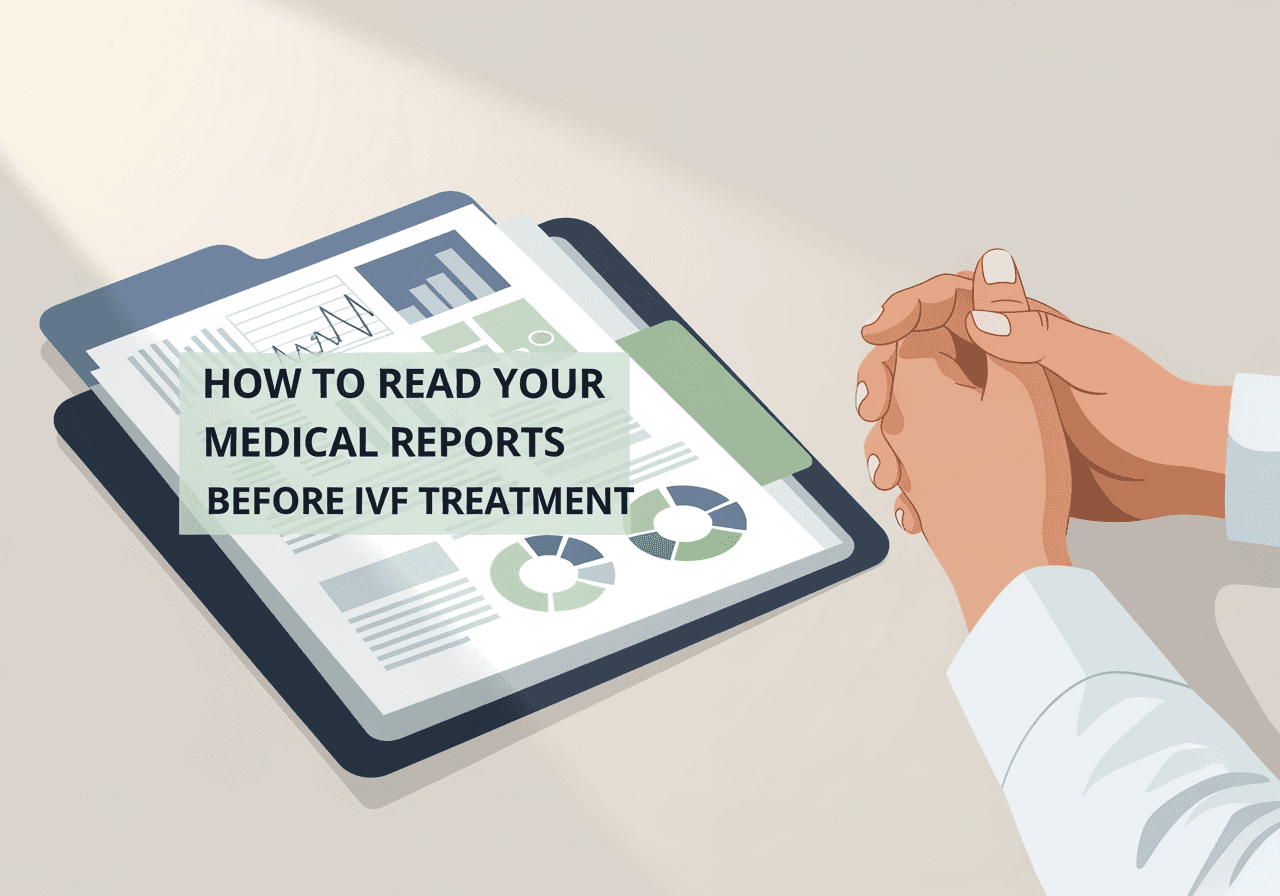
How to Read Your Medical Reports Before IVF Treatment
05 Dec, 2025
 Healthtrip
- Decoding IVF Medical Reports: A Comprehensive Guide
- Where to Locate Your IVF-Related Medical Reports
- Why Understanding Your Medical Reports is Crucial Before IVF
- Key Parameters to Look for in Your Fertility Reports < li>Examples of Medical Report Interpretation in IVF
- When and Why to Consult a Specialist Like those at Fortis Escorts Heart Institute or Vejthani Hospital
- Empowering Your IVF Journey: Knowledge is Key
Understanding Hormone Levels
FSH (Follicle-Stimulating Hormone)
FSH is like the conductor of your ovarian orchestra, stimulating the growth of follicles, each housing a precious egg. High levels of FSH can sometimes suggest diminished ovarian reserve, meaning your ovaries might not be as responsive to stimulation as we'd like. Don't panic! It simply provides a baseline for your doctor to tailor your treatment plan. On the other hand, low levels might indicate issues with the pituitary gland. Your doctor, perhaps one of the experts at Bangkok Hospital or Vejthani Hospital, will interpret these levels in conjunction with other tests and your overall medical history. Remember, it's about the overall picture, not just one number.
Most popular procedures in India




LH (Luteinizing Hormone)
LH plays a crucial role in ovulation, triggering the release of the egg from the follicle. Monitoring LH levels is essential during IVF to ensure proper timing of egg retrieval. An LH surge indicates that ovulation is imminent, and your doctor will use this information to optimize the timing of your procedure. Irregular LH levels can sometimes indicate hormonal imbalances, such as polycystic ovary syndrome (PCOS), but again, this is just one piece of the puzzle. Facilities such as Saudi German Hospital Cairo, Egypt or NMC Specialty Hospital, Al Nahda, Dubai have qualified professionals, who can help you further with detailed information.

Wellness Treatments
Give yourself the time to relax
Lowest Prices Guaranteed!

Lowest Prices Guaranteed!
Estradiol (E2)
Estradiol, a form of estrogen, is primarily produced by the ovaries and is responsible for the development and maintenance of female reproductive tissues. In the context of IVF, estradiol levels are monitored to assess the growth and maturity of follicles. Higher estradiol levels generally indicate a good response to ovarian stimulation, suggesting that multiple follicles are developing nicely. Low levels, on the other hand, might prompt your doctor to adjust your medication dosage. The interpretation of estradiol levels is carefully balanced, considering the number and size of follicles observed during ultrasound monitoring. Doctors at hospitals like Quironsalud Hospital Murcia and Hisar Intercontinental Hospital are well equipped to handle monitoring and changes in hormone levels for successful IVF Treatments.
Progesterone
Progesterone is the hormone that prepares the lining of the uterus for implantation of a fertilized egg. After ovulation (or egg retrieval in IVF), progesterone levels rise to support a potential pregnancy. In IVF, progesterone supplementation is often used to ensure adequate levels, especially during the luteal phase (the time between ovulation and a pregnancy test). Low progesterone levels can hinder implantation, while adequate levels create a welcoming environment for the embryo. Monitoring progesterone is crucial to optimize the chances of successful implantation and a healthy pregnancy. You can always seek assistance from Healthtrip, who can connect you to esteemed hospitals such as LIV Hospital, Istanbul or Fortis Hospital, Noida for further clarifications.
Understanding Ovarian Reserve
AMH (Anti-Müllerian Hormone)
AMH is like a peek into your ovarian reserve, giving us an estimate of the number of eggs remaining in your ovaries. Think of it as checking your egg supply's inventory. Higher AMH levels generally suggest a larger ovarian reserve, while lower levels may indicate a diminished reserve. However, AMH isn't the whole story. It doesn't tell us about egg quality, just quantity. It is a valuable tool for planning your IVF cycle and determining the appropriate medication dosage. Don’t fret if your AMH is lower than expected, facilities like IERA Lisbon Assisted Reproduction Institute and First Fertility Bishkek, Kyrgyzstan have the right experts to guide you.
AFC ( Antral Follicle Count)
The antral follicle count (AFC) is determined by ultrasound and represents the number of small follicles (antral follicles) visible in your ovaries at the beginning of your menstrual cycle. Each antral follicle has the potential to develop into a mature egg during an IVF cycle. A higher AFC generally correlates with a better response to ovarian stimulation. Like AMH, AFC provides valuable information about your ovarian reserve and helps your doctor personalize your treatment plan. It's another piece of the puzzle in understanding your fertility potential. You can get your antral follicle count done at hospitals such as Yanhee International Hospital and BNH Hospital, where Healthtrip can assist you with accommodation and travel.
Uterine Health Assessments
Hysterosalpingogram (HSG)
An HSG is an X-ray procedure used to evaluate the shape of the uterus and check whether the fallopian tubes are open. It involves injecting a contrast dye into the uterus and taking X-ray images. This test helps identify any blockages or abnormalities in the fallopian tubes that might prevent the egg from traveling to the uterus or interfere with embryo implantation. It can also reveal uterine abnormalities like fibroids or polyps. If you are looking to get an HSG done, you can consider hospitals such as Taoufik Hospitals Group, Tunisia or Jimenez Diaz Foundation University Hospital.
Hysteroscopy
Hysteroscopy involves inserting a thin, lighted scope (hysteroscope) into the uterus to directly visualize the uterine lining. This allows your doctor to identify and potentially treat any abnormalities, such as polyps, fibroids, or adhesions, that could interfere with embryo implantation. Hysteroscopy can be diagnostic (to identify problems) or operative (to correct problems). It's a valuable tool for ensuring that your uterus is in the best possible condition for pregnancy. Healthtrip can assist you with appointments at hospitals such as Cleveland Clinic London or The Royal Marsden Private Care, London that have state-of-art facilities for hysteroscopy.
Semen Analysis
Sperm Count
Sperm count refers to the number of sperm present in a semen sample. A healthy sperm count is a crucial factor in male fertility. Low sperm count (oligospermia) can make it more difficult to conceive naturally. The World Health Organization (WHO) has defined the normal range, and your doctor will assess your sperm count in relation to these guidelines. While a lower count might necessitate interventions like ICSI (intracytoplasmic sperm injection) during IVF, it doesn't necessarily mean conception is impossible. To get accurate semen analysis you can visit hospitals such as Mount Elizabeth Hospital or Singapore General Hospital.
Sperm Motility
Sperm motility refers to the ability of sperm to move efficiently. Progressive motility, in particular, is important, as it describes sperm that are swimming forward in a straight line or large circles, allowing them to reach the egg. Poor motility (asthenospermia) can hinder fertilization. Semen analysis reports typically categorize motility into different grades, and your doctor will assess these grades to determine the overall motility of the sperm sample. If you need assistance with male infertility, hospitals such as Hegde Hospital or Dr. Hassan Al-Abdulla Medical Center can help you treat the problem.
Sperm Morphology
Sperm morphology refers to the shape and structure of sperm. Normal morphology is important for sperm to be able to penetrate the egg. Semen analysis reports assess the percentage of sperm with normal morphology. Strict criteria, like Kruger's strict morphology, are often used to evaluate sperm shape. While a lower percentage of normal forms doesn't automatically mean infertility, it can contribute to difficulty conceiving. Your fertility specialist will take morphology into account along with other semen parameters to assess overall male fertility. You can consult doctors at hospitals such as Quironsalud Hospital Toledo or Pantai Hospital Kuala Lumpur, Malaysia, who can give you a detailed idea about sperm morphology.
Genetic Testing
Karyotype Analysis
Karyotype analysis examines the chromosomes in your cells to identify any abnormalities in number or structure. Chromosomal abnormalities can sometimes lead to infertility, recurrent miscarriages, or genetic disorders in offspring. Karyotype analysis can be performed on both partners to assess their risk of carrying or passing on chromosomal abnormalities. If abnormalities are detected, genetic counseling can help you understand the implications and explore options like preimplantation genetic testing (PGT). You can always seek assistance from Healthtrip, who can connect you to esteemed hospitals such as Max Healthcare Saket or NMC Specialty Hospital, Abu Dhabi, for further clarifications.
Preimplantation Genetic Testing (PGT)
Preimplantation genetic testing (PGT) is a technique used during IVF to screen embryos for genetic abnormalities before they are transferred to the uterus. A few cells are removed from each embryo and analyzed to determine whether they have the correct number of chromosomes (PGT-A) or carry specific genetic mutations (PGT-M). PGT can help increase the chances of a successful pregnancy and reduce the risk of miscarriage or having a child with a genetic disorder. It's a powerful tool for families with a known risk of genetic conditions or those who have experienced recurrent pregnancy loss. Hospitals such as Helios Klinikum Erfurt and NMC Royal Hospital, DIP, Dubai have access to cutting edge technology to conduct PGT tests with precision, which will help ensure the success of the IVF process.
Decoding IVF Medical Reports: A Comprehensive Guide
Embarking on the journey of In Vitro Fertilization (IVF) can feel like navigating a maze filled with complex medical jargon and an overwhelming amount of information. You're handed reports brimming with numbers, abbreviations, and scientific terms that might as well be written in a foreign language. Understanding these reports isn't just about deciphering the data; it's about empowering yourself to actively participate in your fertility treatment and make informed decisions alongside your healthcare team. Think of your medical reports as a roadmap to your reproductive health, outlining the current landscape and guiding the path forward. Just as you wouldn't start a road trip without understanding the map, you shouldn't proceed with IVF without a solid grasp of what your medical reports are telling you. At Healthtrip, we believe that knowledge is power, especially when it comes to your health. This guide aims to demystify your IVF medical reports, providing you with the tools and insights needed to navigate this crucial aspect of your fertility journey. Imagine being able to confidently discuss your follicle-stimulating hormone (FSH) levels, antral follicle count (AFC), and endometrial lining thickness with your doctor. That's the level of understanding we want to help you achieve. We'll break down the common terms, explain their significance, and show you how they relate to the overall success of your IVF treatment. So, buckle up and get ready to decode the secrets hidden within your medical reports – your informed and empowered IVF journey starts here!
Medical reports related to IVF are multifaceted documents that provide insight into a patient's reproductive health. These reports encompass a variety of tests and assessments that shed light on different aspects of fertility. They typically include hormone level analysis, which can evaluate the levels of follicle-stimulating hormone (FSH), luteinizing hormone (LH), estradiol (E2), and anti-Müllerian hormone (AMH), among others. Each of these hormones plays a crucial role in the reproductive process, and their levels can provide valuable information about ovarian reserve, egg quality, and the overall functionality of the reproductive system. These are like the dials and gauges on your car's dashboard, giving you real-time feedback on how your "engine" (your reproductive system) is running. Furthermore, medical reports for IVF often include imaging results, such as ultrasound scans. Ultrasound imaging allows healthcare professionals to visualize the ovaries, uterus, and other reproductive organs, providing essential information about their size, shape, and structure. One important metric derived from ultrasound is the antral follicle count (AFC), which provides an estimate of the number of follicles available in the ovaries. These pre-antral follicles are like potential seeds for the fertility cycle, and having a good count is essential for a successful IVF outcome. Understanding those elements of your report can seem overwhelming initially, but it's like learning the rules of a new, important game, one where winning means achieving your dreams of parenthood. At Healthtrip, we believe that empowering patients with this knowledge is a crucial step toward building confidence and control in your fertility journey.
Where to Locate Your IVF-Related Medical Reports
Finding your IVF-related medical reports might seem like a scavenger hunt at first, but knowing where to look can save you time and reduce stress. The most common place to start is with the fertility clinic or hospital where you underwent your initial evaluation and subsequent treatment. Typically, these institutions have established procedures for providing patients with access to their medical records. You can usually request your reports directly from the medical records department, either in person, via mail, or through an online patient portal. For example, if you had initial tests done at Saudi German Hospital Cairo, Egypt, contact their medical records department; they would guide you through the process of obtaining your records, which may involve filling out a form and providing identification. Many modern fertility clinics, like Vejthani Hospital in Bangkok, Thailand, offer online patient portals that allow secure access to your medical reports and other important documents. These portals often provide a convenient way to view, download, and share your reports with other healthcare providers. When you receive your reports, it's a good idea to store them in a secure location, whether it's a physical file or a password-protected digital folder. This ensures that you have easy access to your information when needed and that it remains confidential. At Healthtrip, we understand that navigating the healthcare system can be challenging, especially when it comes to accessing sensitive medical information. By knowing where to look and how to request your reports, you can take proactive steps to stay informed and engaged in your IVF journey.
In addition to fertility clinics and hospitals, other healthcare providers involved in your IVF treatment may also have relevant medical reports. For example, your primary care physician or a specialist, such as an endocrinologist, might have conducted initial blood tests or physical examinations that are relevant to your fertility assessment. These reports can provide additional context and insights into your overall health status. When requesting records, be sure to specify the exact reports you need, including the dates of service. This will help ensure that you receive the correct documents and avoid delays. If you have undergone genetic testing or specialized fertility evaluations, the laboratories or diagnostic centers that performed these tests will also have records of your results. These reports can provide important information about your genetic profile and potential risks that may affect your fertility treatment. Be aware that there may be fees associated with obtaining copies of your medical records, depending on the institution and the laws in your location. It's a good idea to inquire about these fees in advance so that you can budget accordingly. As you gather your IVF-related medical reports, remember that you are building a comprehensive picture of your reproductive health. Having all the necessary information at your fingertips will empower you to make informed decisions and actively participate in your care. Healthtrip is here to support you every step of the way, providing you with the resources and guidance you need to navigate your fertility journey with confidence.
Why Understanding Your Medical Reports is Crucial Before IVF
Before embarking on the IVF journey, understanding your medical reports isn't just a good idea; it's absolutely essential. Think of it as reading the instruction manual before assembling a complex piece of furniture – you wouldn't want to start randomly putting pieces together without a clear understanding of the process, right? Similarly, understanding your medical reports allows you to grasp the nuances of your reproductive health, identify potential challenges, and make informed decisions about your treatment plan. These reports provide a detailed overview of your hormone levels, ovarian reserve, uterine health, and other critical factors that can influence the success of IVF. By understanding these details, you become an active participant in your care, rather than a passive recipient. Moreover, understanding your medical reports helps you ask the right questions. When your doctor is explaining your treatment options, you can engage in a more meaningful dialogue, clarify any doubts, and ensure that the proposed plan aligns with your goals and values. For example, if your AMH level is lower than expected, you can discuss the implications for egg retrieval and explore alternative strategies to maximize your chances of success. At Healthtrip, we believe that empowered patients are the best patients. By investing the time and effort to understand your medical reports, you are taking a proactive step toward achieving your dreams of parenthood.
Furthermore, understanding your medical reports allows you to compare and contrast opinions from different fertility specialists. Seeking second opinions is a common practice in IVF, and having a solid grasp of your medical history enables you to evaluate the recommendations of various doctors and choose the treatment plan that feels right for you. Imagine you're considering treatment at Vejthani Hospital or even exploring options abroad via Healthtrip; you can present your records and engage in informed discussions with their specialists. Moreover, understanding your reports can help you manage your expectations and prepare emotionally for the IVF process. IVF can be a rollercoaster of emotions, and knowing what to expect can help you cope with the ups and downs. For example, if your medical reports indicate a higher risk of multiple pregnancies, you can discuss the potential complications with your doctor and make an informed decision about embryo transfer. Ultimately, understanding your medical reports empowers you to take control of your fertility journey and make decisions that are aligned with your values and goals. It's about becoming an informed advocate for your own health and working in partnership with your healthcare team to achieve the best possible outcome. Healthtrip is committed to providing you with the resources and support you need to navigate the complexities of IVF with confidence and clarity.
Also Read:
Key Parameters to Look for in Your Fertility Reports
Navigating the world of fertility reports can feel like deciphering a secret code, but fear not! Understanding the key parameters is like having a roadmap for your IVF journey. These reports are packed with valuable insights that can help you and your medical team at places like Vejthani Hospital or Fortis Escorts Heart Institute, tailor the best possible treatment plan. Let's break down some of the most crucial elements you'll encounter.
First up, the hormone levels. These little chemical messengers play a huge role in your reproductive health. Follicle-Stimulating Hormone (FSH) is a key player, indicating ovarian reserve – the number of eggs you have left. Elevated FSH levels might suggest a diminished reserve, but don't panic! It's just one piece of the puzzle. Luteinizing Hormone (LH) is also vital, triggering ovulation. An imbalance can disrupt your cycle. Then there's Estradiol (E2), the main form of estrogen, which helps mature the eggs. Progesterone, crucial for preparing the uterine lining for implantation, is another significant hormone to watch.
Next, let's talk about semen analysis. This report provides a detailed assessment of sperm quality, including count, motility (how well they swim!), and morphology (their shape). Low sperm count, poor motility, or abnormal morphology can all affect fertilization. However, even with less-than-ideal results, there are often solutions like ICSI (Intracytoplasmic Sperm Injection), where a single sperm is directly injected into the egg. Remember, it only takes one good sperm! And remember to discuss these matters with your healthcare provider, don't take any treatment or medication on your own.
Another critical aspect is the uterine assessment. This often involves procedures like a hysteroscopy or sonohysterography to evaluate the uterine lining and check for any abnormalities, such as polyps or fibroids, which could interfere with implantation. A healthy uterus is essential for a successful pregnancy. Additionally, genetic testing reports, such as preimplantation genetic testing for aneuploidy (PGT-A), can provide information about the chromosomal health of embryos, increasing the chances of a successful and healthy pregnancy.
Understanding these key parameters will empower you to have informed discussions with your fertility specialist. Don't hesitate to ask questions and seek clarification on anything you don't understand. Knowledge is power, and in the world of IVF, it can make all the difference. Remember, Healthtrip can connect you with top-notch fertility experts at hospitals like Vejthani Hospital and Fortis Escorts Heart Institute, ensuring you have access to the best possible care and guidance.
Also Read:
Examples of Medical Report Interpretation in IVF
Let's dive into some real-world scenarios to illustrate how understanding your medical reports can impact your IVF journey. We'll look at a couple of hypothetical case studies to show how this information can be interpreted and used to make informed decisions, potentially leading to better outcomes with the help of facilities like Saudi German Hospital Cairo or Yanhee International Hospital. These are just examples, and your individual case will always require personalized medical advice.
Case Study 1: Diminished Ovarian Reserve Imagine a 38-year-old woman named Sarah, who has been trying to conceive for two years. Her FSH levels are elevated, and her AMH (Anti-Müllerian Hormone) is low, indicating diminished ovarian reserve. This means she has fewer eggs remaining compared to someone her age. After consulting with a fertility specialist at Fortis Memorial Research Institute, Gurgaon, Sarah reviews her options. Based on her medical reports, the specialist suggests a more aggressive stimulation protocol to retrieve as many eggs as possible during one IVF cycle. They also discuss the possibility of using donor eggs if her own eggs don't result in viable embryos. Sarah, armed with the knowledge from her reports, feels empowered to make informed decisions about her treatment plan, understanding the potential benefits and limitations of each option.
Case Study 2: Male Factor Infertility Now, let's consider a 35-year-old man named David. His semen analysis reveals low sperm count and poor motility. After further investigation at Vejthani Hospital, it is determined that he has a varicocele, a condition that can affect sperm production. David's medical reports and the specialist's recommendation lead him to consider varicocele repair surgery to potentially improve his sperm parameters. Alternatively, the reports indicate that ICSI (Intracytoplasmic Sperm Injection) could be a viable option to bypass the sperm quality issues and directly fertilize the eggs. The specialist at Healthtrip suggests lifestyle changes, such as quitting smoking and improving his diet, to further boost sperm health. David and his partner, understanding the implications of his reports, decide to pursue ICSI while he simultaneously works on improving his overall health.
These case studies highlight the importance of understanding your medical reports. They provide valuable insights that can guide treatment decisions and help you proactively manage your fertility journey. Remember, every individual's situation is unique, so it's crucial to work closely with a fertility specialist who can interpret your reports and create a personalized plan tailored to your specific needs. And Healthtrip is here to help you connect with the right experts at facilities like Saudi German Hospital Cairo or Yanhee International Hospital for the best possible care.
Also Read:
When and Why to Consult a Specialist Like those at Fortis Escorts Heart Institute or Vejthani Hospital
So, you've got your hands on your IVF-related medical reports. Now what? While understanding the basics is empowering, there comes a point where the expertise of a specialist is crucial. Knowing when to consult a professional, such as those at Fortis Escorts Heart Institute or Vejthani Hospital, can be the key to unlocking the best possible outcome for your fertility journey. It's like having a seasoned navigator who knows how to chart the right course through complex waters.
Firstly, if your reports reveal any abnormalities or concerning results, it's definitely time to seek expert advice. This could include significantly elevated FSH levels, indicating diminished ovarian reserve; low sperm count or motility in a semen analysis; or the presence of uterine polyps or fibroids detected during a uterine assessment. These findings require a specialist's interpretation to understand their impact on your fertility and to develop an appropriate treatment plan. Don't try to self-diagnose or rely solely on Dr. Google! A specialist can provide accurate and personalized guidance.
Secondly, even if your reports appear "normal," but you've been struggling to conceive for an extended period, consulting a specialist is highly recommended. Infertility can be a complex issue with underlying causes that may not be immediately apparent. A fertility specialist can conduct further investigations, such as advanced hormone testing or genetic screening, to identify any hidden factors that may be hindering your chances of conception. They can also assess your overall reproductive health and recommend the most appropriate treatment options, from lifestyle modifications to assisted reproductive technologies like IVF.
Thirdly, if you're considering IVF or other assisted reproductive technologies, consulting a specialist is an absolute must. IVF is a complex and multifaceted process that requires careful planning and monitoring. A fertility specialist can evaluate your medical history, review your reports, and tailor an IVF protocol that maximizes your chances of success. They can also guide you through the entire process, providing emotional support and addressing any concerns you may have. Choosing a reputable clinic or hospital, such as Fortis Escorts Heart Institute, Vejthani Hospital, or even exploring options through Healthtrip, ensures you're in capable hands.
Ultimately, consulting a specialist is about gaining clarity, receiving personalized guidance, and maximizing your chances of a successful pregnancy. Don't hesitate to seek expert advice when you need it. Remember, Healthtrip can connect you with experienced fertility specialists at leading hospitals, empowering you to take control of your fertility journey and pursue your dreams of parenthood with confidence.
Also Read:
Empowering Your IVF Journey: Knowledge is Key
Embarking on an IVF journey can feel like navigating a maze, but with the right knowledge and support, you can transform it into a path filled with hope and empowerment. Understanding your medical reports is a critical step in this process, providing you with valuable insights into your reproductive health and guiding your treatment decisions. It's like having a secret weapon that allows you to actively participate in your own care.
By familiarizing yourself with the key parameters in your fertility reports, such as hormone levels, semen analysis results, and uterine assessments, you'll be better equipped to understand your diagnosis and discuss treatment options with your fertility specialist. This knowledge will also empower you to ask informed questions, advocate for your needs, and make confident decisions about your care. Remember, you are an active partner in this journey, and your voice matters.
When faced with complex or concerning results, don't hesitate to seek the expertise of a specialist at facilities like Fortis Hospital Noida. A fertility specialist can provide a comprehensive evaluation, interpret your reports accurately, and develop a personalized treatment plan tailored to your specific circumstances. They can also offer emotional support and guidance throughout the IVF process, helping you navigate the challenges and celebrate the milestones along the way. And it’s important to choose the best hospital so it's better to review all available hospitals in your region, Like Saudi German Hospital Alexandria, Egypt has a dedicated team of specialists to guide and treat its patients.
Healthtrip is here to support you every step of the way, connecting you with leading fertility specialists and hospitals around the world. Whether you're seeking a second opinion, exploring different treatment options, or simply looking for reliable information, Healthtrip can provide you with the resources and support you need to navigate your IVF journey with confidence. Knowledge is power, and with Healthtrip by your side, you can empower yourself to achieve your dreams of parenthood. So, take charge of your journey, embrace the knowledge, and believe in the possibility of a brighter future.
Also Read:
Related Blogs

Why Second Opinions Matter Before Eye Surgery Doctors Explain
Deep medical insights, treatment comparisons, safety standards, and technological updates

International Patients' Guide to Understanding Eye Surgery Terminology
Deep medical insights, treatment comparisons, safety standards, and technological updates

How Healthtrip Ensures Patient Safety During Eye Surgery Procedures
Deep medical insights, treatment comparisons, safety standards, and technological updates

Choosing Between Treatment Options for Eye Surgery
Deep medical insights, treatment comparisons, safety standards, and technological updates
How to Read Your Medical Reports Before Eye Surgery
Deep medical insights, treatment comparisons, safety standards, and technological updates

Breakthrough Medical Technologies Transforming Eye Surgery in India
Deep medical insights, treatment comparisons, safety standards, and technological updates