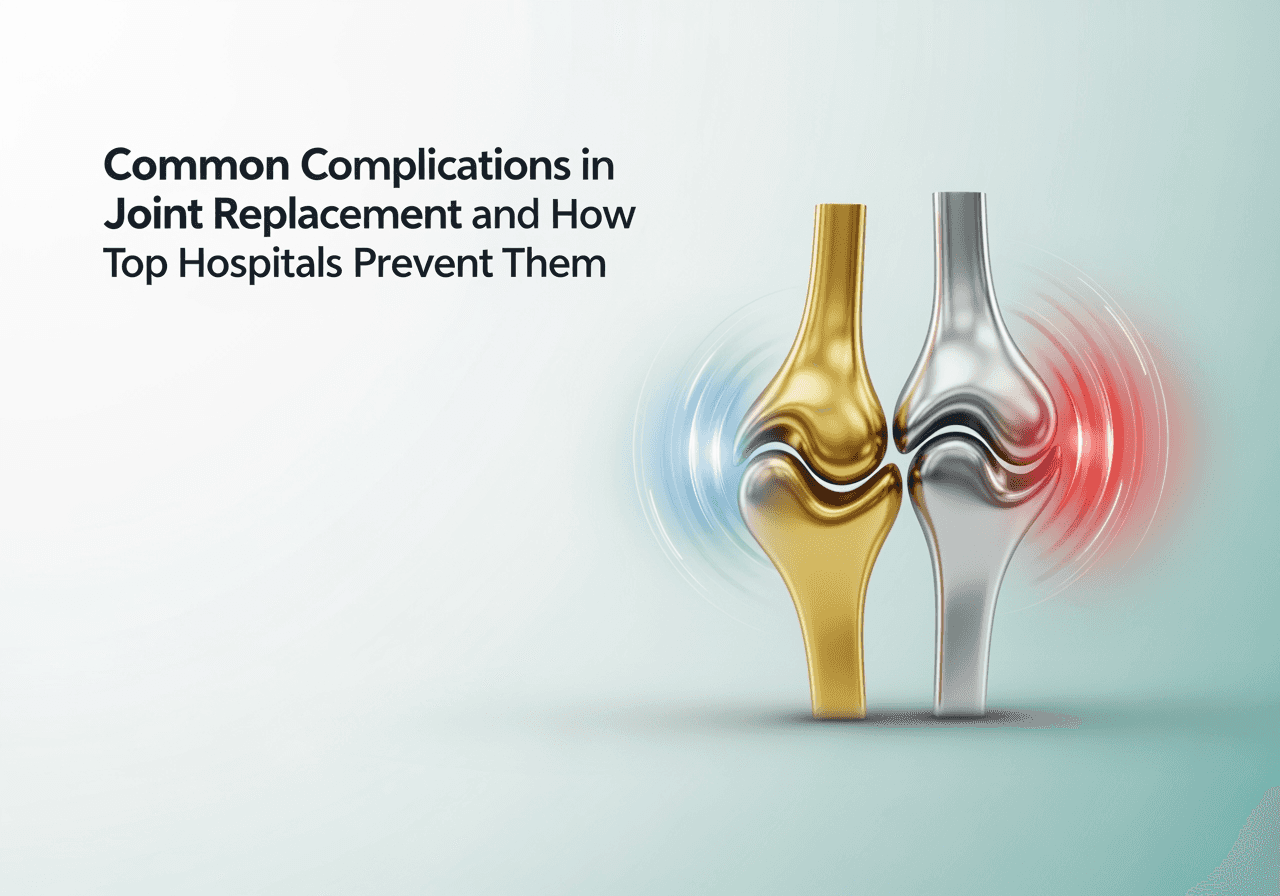
Common Complications in Joint Replacement and How Top Hospitals Prevent Them
05 Dec, 2025
 Healthtrip
- Common Joint Replacement Complications: An Overview
- Preventing Infections After Joint Replacement: Strategies Used by Top Hospitals
- Managing Blood Clot Risks: Protocols at Leading Hospitals Like Fortis Escorts Heart Institute and Vejthani Hospital < li>Addressing Joint Dislocation: Surgical Techniques and Rehabilitation Programs at OCM Orthopädische Chirurgie München and Quironsalud Hospital Toledo
- Combating Implant Loosening: Design Innovations and Best Practices at Singapore General Hospital and Helios Klinikum Erfurt
- Minimizing Nerve Damage: Intraoperative Monitoring and Post-operative Care at Memorial Sisli Hospital and Bangkok Hospital
- Conclusion
Common Complications in Joint Replacement
Infection
Infection is one of the most concerning complications following joint replacement surgery. It can occur when bacteria enter the surgical site during or after the procedure. Symptoms of infection can include fever, redness, swelling, and pain around the joint. While it's rare, infection can lead to serious complications, such as the need for additional surgery to remove and replace the artificial joint. Top hospitals employ stringent infection control protocols to minimize this risk. Hospitals like Memorial Bahçelievler Hospital and Vejthani Hospital adhere to strict sterilization procedures and utilize advanced air filtration systems in operating rooms. They also emphasize pre-operative screening to identify and treat any existing infections, reducing the likelihood of post-operative complications. These proactive measures are vital in ensuring a successful and infection-free recovery.
Most popular procedures in India

Blood Clots
Blood clots are another potential complication following joint replacement surgery, particularly in the legs (deep vein thrombosis, or DVT) or lungs (pulmonary embolism, or PE). These clots can form due to reduced mobility after surgery, leading to potentially life-threatening situations. Symptoms of DVT include pain, swelling, and tenderness in the leg, while symptoms of PE include chest pain, shortness of breath, and coughing up blood. Fortunately, top hospitals take proactive steps to prevent blood clots. This includes the use of blood-thinning medications, compression stockings, and sequential compression devices (SCDs) that gently massage the legs to promote circulation. Early mobilization, encouraging patients to move around as soon as safely possible after surgery, is also crucial. Hospitals like Fortis Escorts Heart Institute and Yanhee International Hospital employ comprehensive strategies to minimize the risk of blood clots, ensuring a safer recovery.
Dislocation
Joint dislocation, where the artificial joint comes out of its socket, is a risk, especially in the early stages of recovery. This can happen due to certain movements or positions that put stress on the new joint. Symptoms of dislocation include sudden pain, inability to move the joint, and a visible deformity. While dislocations can be unsettling, they are often treatable with prompt medical attention. Top hospitals educate patients on proper post-operative precautions and movement restrictions to minimize the risk of dislocation. Physical therapy plays a key role in strengthening the muscles around the joint and improving stability. Hospitals like NMC Specialty Hospital, Al Nahda, Dubai, and Bangkok Hospital provide detailed rehabilitation programs tailored to each patient's needs. In the event of a dislocation, skilled medical teams can often reposition the joint without the need for further surgery.

Wellness Treatments
Give yourself the time to relax
Lowest Prices Guaranteed!

Lowest Prices Guaranteed!
Loosening and Wear
Over time, artificial joints can loosen or wear down, especially with continued use. This can lead to pain, instability, and reduced mobility. While modern joint replacements are designed to last for many years, factors such as age, activity level, and weight can impact their lifespan. Symptoms of loosening or wear include increasing pain, a clicking or grinding sensation in the joint, and difficulty bearing weight. To address this, top hospitals utilize advanced materials and surgical techniques to enhance the longevity of joint replacements. Regular follow-up appointments and imaging studies help monitor the condition of the artificial joint and detect any early signs of loosening or wear. Hospitals like Helios Klinikum Erfurt and Singapore General Hospital emphasize the importance of long-term monitoring and provide comprehensive revision surgery options when needed.
Nerve Damage
Nerve damage is a less common but possible complication of joint replacement surgery. During the procedure, nerves around the joint can be stretched, compressed, or even cut, leading to pain, numbness, tingling, or weakness in the affected area. While most nerve injuries are temporary and resolve on their own, some can be permanent. To minimize the risk of nerve damage, experienced surgeons at top hospitals employ meticulous surgical techniques and utilize advanced imaging technology to guide their procedures. Pre-operative nerve studies can also help identify any existing nerve conditions. Hospitals like Cleveland Clinic London and Jiménez Díaz Foundation University Hospital prioritize nerve preservation during surgery and offer comprehensive post-operative rehabilitation programs to help patients regain nerve function.
How Top Hospitals Prevent Complications
Pre-operative Assessment and Optimization
Preventing complications starts well before the surgery itself. Top hospitals conduct thorough pre-operative assessments to identify any factors that could increase the risk of complications. This includes a detailed medical history, physical examination, and laboratory tests to evaluate the patient's overall health. Conditions like diabetes, heart disease, and obesity can increase the risk of infection, blood clots, and other complications. Hospitals like Saudi German Hospital Cairo, Egypt, and Quironsalud Hospital Murcia work closely with patients to manage these conditions before surgery, optimizing their health and reducing the likelihood of adverse outcomes. This may involve medication adjustments, lifestyle changes, and nutritional counseling. A comprehensive pre-operative assessment ensures that patients are in the best possible condition for a successful surgery and recovery.
Advanced Surgical Techniques and Technology
The expertise of the surgical team and the technology they use play a crucial role in preventing complications. Top hospitals employ highly skilled surgeons who are experienced in performing joint replacement surgery using the latest techniques. Minimally invasive surgical approaches, for example, can reduce tissue damage, blood loss, and post-operative pain, leading to faster recovery times. Hospitals like LIV Hospital, Istanbul, and Mount Elizabeth Hospital invest in state-of-the-art operating rooms equipped with advanced imaging systems, robotic-assisted surgical devices, and other technologies that enhance precision and accuracy. These technologies allow surgeons to perform complex procedures with greater control, minimizing the risk of complications and improving patient outcomes.
Stringent Infection Control Protocols
As mentioned earlier, infection is a significant concern following joint replacement surgery. Top hospitals implement rigorous infection control protocols to create a sterile environment and minimize the risk of infection. This includes strict hand hygiene practices, the use of sterile surgical instruments and drapes, and advanced air filtration systems in operating rooms. Hospitals like Taoufik Clinic, Tunisia, and Quironsalud Hospital Toledo also emphasize pre-operative skin preparation and post-operative wound care to prevent bacteria from entering the surgical site. Regular audits and surveillance programs help monitor infection rates and identify areas for improvement. By adhering to these stringent protocols, hospitals can significantly reduce the risk of infection and ensure a smooth recovery for patients.
Personalized Rehabilitation Programs
Rehabilitation is a crucial part of the recovery process following joint replacement surgery. Top hospitals develop personalized rehabilitation programs tailored to each patient's individual needs and goals. These programs typically include physical therapy, occupational therapy, and pain management strategies. Physical therapy focuses on strengthening the muscles around the joint, improving range of motion, and restoring mobility. Occupational therapy helps patients regain the skills needed to perform daily activities, such as dressing, bathing, and cooking. Hospitals like Fortis Memorial Research Institute, Gurgaon, and BNH Hospital provide comprehensive rehabilitation services, with experienced therapists who work closely with patients to help them achieve their optimal level of function. Personalized rehabilitation programs not only speed up recovery but also help prevent complications like dislocation and stiffness.
Patient Education and Support
Empowering patients with knowledge and providing ongoing support are essential for preventing complications and promoting a successful recovery. Top hospitals offer comprehensive patient education programs that cover all aspects of joint replacement surgery, from pre-operative preparation to post-operative care. This includes information on pain management, wound care, medication management, and activity restrictions. Hospitals like Saudi German Hospital Alexandria, Egypt, and Pantai Hospital Kuala Lumpur, Malaysia, also provide patients with written materials, videos, and online resources to help them stay informed and engaged in their care. Support groups and peer mentoring programs can also be valuable resources for patients, providing a sense of community and helping them cope with the challenges of recovery. By educating and supporting patients, hospitals can help them make informed decisions and actively participate in their own care, leading to better outcomes.
Common Joint Replacement Complications: An Overview
Joint replacement surgery, be it for the hip, knee, or shoulder, is a life-changing procedure for many, offering relief from chronic pain and restoring mobility. However, like any surgical intervention, it's not without its potential complications. Understanding these risks is crucial for both patients and their families to make informed decisions and prepare for the recovery journey. One of the most common concerns is infection, which can occur at the surgical site either shortly after the procedure or even years later. These infections can stem from bacteria entering the body during surgery or from other infections in the body that spread to the joint. Symptoms can range from redness and swelling around the incision to fever and persistent pain. Another potential issue is blood clots, which can form in the deep veins of the legs (deep vein thrombosis, or DVT) or travel to the lungs (pulmonary embolism, or PE), a potentially life-threatening condition. Patients are often given blood thinners and encouraged to move around soon after surgery to minimize this risk. Joint dislocation, where the artificial joint comes out of its socket, is another complication, particularly in hip replacements. This can happen due to certain movements or positions, especially in the early stages of recovery. Implant loosening, where the artificial joint becomes unstable over time, can also occur, often due to wear and tear or bone loss around the implant. Nerve damage, although less common, can result in pain, numbness, or weakness in the affected limb. Healthtrip understands that navigating these potential complications can seem daunting. That's why we partner with leading hospitals worldwide, such as Saudi German Hospital Alexandria, Egypt, which are committed to providing comprehensive pre-operative education, meticulous surgical techniques, and robust post-operative care to minimize the risk of these complications and ensure the best possible outcome for our patients seeking joint replacement abroad through Healthtrip.
Preventing Infections After Joint Replacement: Strategies Used by Top Hospitals
Infection after joint replacement is a serious concern, but hospitals around the globe are implementing rigorous protocols to minimize this risk. These strategies often begin well before the surgery itself. Patients at hospitals like Fortis Shalimar Bagh may undergo a thorough screening process to identify any pre-existing infections, such as urinary tract infections or skin infections, which are treated proactively to prevent them from spreading to the surgical site. During the surgery itself, strict sterile techniques are paramount. Operating rooms are equipped with advanced air filtration systems to minimize airborne bacteria, and surgical teams adhere to meticulous hand hygiene protocols. Often, antibiotic-impregnated cement is used to secure the artificial joint, providing an extra layer of protection against bacterial colonization. Furthermore, surgical instruments are sterilized using the most advanced methods to ensure complete elimination of microbes. Post-operatively, patients are closely monitored for any signs of infection. Prophylactic antibiotics are typically administered for a short period to prevent bacterial growth. Wound care is meticulously managed, with regular dressing changes and careful inspection of the incision site for any signs of redness, swelling, or drainage. Patient education is also a key component of infection prevention. Patients are taught how to properly care for their incision, recognize the signs of infection, and report any concerns to their healthcare team immediately. Healthtrip’s partner hospitals, for example, Saudi German Hospital Cairo, Egypt understand the importance of this holistic approach to infection prevention. By combining stringent pre-operative screening, meticulous surgical techniques, and comprehensive post-operative care, they strive to provide a safe and infection-free environment for patients undergoing joint replacement surgery facilitated through Healthtrip.
Managing Blood Clot Risks: Protocols at Leading Hospitals Like Fortis Escorts Heart Institute and Vejthani Hospital
Blood clot formation is a significant risk following joint replacement surgery, but leading hospitals have implemented comprehensive protocols to mitigate this threat. These protocols typically involve a multi-faceted approach that combines pharmacological and mechanical strategies. One of the cornerstones of blood clot prevention is the use of anticoagulant medications, commonly known as blood thinners. These medications help to prevent the formation of clots in the deep veins of the legs. Hospitals like Vejthani Hospital in Bangkok carefully assess each patient's individual risk factors, such as age, weight, medical history, and type of surgery, to determine the most appropriate type and dosage of anticoagulant medication. Mechanical prophylaxis also plays a crucial role in blood clot prevention. This often involves the use of intermittent pneumatic compression devices (IPC), which are inflatable sleeves that wrap around the legs and rhythmically compress and release, helping to improve blood flow and prevent stasis, a major risk factor for clot formation. Early mobilization is another key component of blood clot prevention. Patients are encouraged to get out of bed and walk around as soon as possible after surgery, even if it's just for a few minutes at a time. This helps to stimulate blood flow and reduce the risk of clot formation. Hospitals also provide patients with comprehensive education on blood clot prevention, including information on the signs and symptoms of DVT and PE, and the importance of adhering to their medication regimen and following their doctor's instructions. Through Healthtrip, patients gain access to hospitals employing these advanced protocols, like Fortis Memorial Research Institute, Gurgaon, ensuring meticulous risk assessment, appropriate medication, and early mobilization. This proactive approach minimizes the risk of blood clots and promotes a smoother recovery process for those seeking joint replacement abroad.
Also Read:
Addressing Joint Dislocation: Surgical Techniques and Rehabilitation Programs at OCM Orthopädische Chirurgie München and Quironsalud Hospital Toledo
Joint dislocation after a replacement surgery, while not extremely common, can be a source of considerable anxiety and discomfort for patients. It occurs when the ball of the artificial joint comes out of the socket. Several factors can contribute to this, including the patient’s anatomy, the position of the implant, and the strength of the surrounding muscles and ligaments. Imagine the feeling of your new joint suddenly giving way – it’s not just physically painful but also emotionally distressing. Luckily, advancements in surgical techniques and rehabilitation programs are significantly reducing the incidence of dislocation and improving patient outcomes. At OCM Orthopädische Chirurgie München, they emphasize a personalized approach, carefully assessing each patient’s specific risk factors before surgery. They utilize advanced imaging technologies to plan the surgery meticulously, ensuring optimal implant placement and stability. Surgical techniques such as the direct anterior approach for hip replacement, known for minimizing muscle disruption, are favored. This approach often leads to quicker recovery times and reduced risk of dislocation. Similarly, Quironsalud Hospital Toledo prioritizes a comprehensive pre-operative assessment. Their rehabilitation programs are tailored to each patient's needs, focusing on strengthening the muscles around the joint and improving range of motion. Patients are educated on proper movement techniques and precautions to avoid dislocation. Early mobilization and gradual increases in activity levels are key components of their post-operative care, ensuring a return to a fulfilling and active life. They focus not just on the physical aspect but also the patient's mental well-being, providing support and encouragement throughout the recovery process. This combined approach minimizes dislocation risks and ensures a smoother recovery journey for patients opting for joint replacement.
Combating Implant Loosening: Design Innovations and Best Practices at Singapore General Hospital and Helios Klinikum Erfurt
Implant loosening is a long-term complication following joint replacement surgery, where the artificial joint gradually detaches from the bone. This can result in pain, instability, and the need for revision surgery. The primary causes of implant loosening are wear and tear of the implant materials, osteolysis (bone loss around the implant), and infection. It’s a frustrating scenario for patients who have invested time and effort into their joint replacement. Fortunately, ongoing research and innovation are continually improving implant designs and surgical techniques to minimize the risk of loosening. Singapore General Hospital is at the forefront of these advancements. They utilize advanced implant materials such as highly cross-linked polyethylene and ceramic-on-ceramic bearings, which are more resistant to wear and tear. These materials generate fewer wear particles, reducing the risk of osteolysis. Furthermore, their surgical teams employ cementless fixation techniques, allowing the bone to grow directly onto the implant for a more secure and lasting bond. Similarly, Helios Klinikum Erfurt focuses on optimizing implant design and surgical precision. They use computer-assisted surgery (CAS) to ensure accurate implant placement and alignment, which is crucial for long-term stability. Their post-operative care includes regular monitoring with advanced imaging to detect any early signs of loosening. They also emphasize patient education on weight management and activity modification to reduce stress on the joint. By combining cutting-edge technology, meticulous surgical techniques, and comprehensive post-operative care, these leading hospitals are ensuring that joint replacements remain durable and functional for many years. They understand that each patient's situation is unique, and they provide the best possible care to ensure their patients can enjoy life to the fullest, free from the worry of implant loosening.
Minimizing Nerve Damage: Intraoperative Monitoring and Post-operative Care at Memorial Sisli Hospital and Bangkok Hospital
Nerve damage, though a relatively rare complication of joint replacement surgery, can have a significant impact on a patient's recovery and quality of life. It can manifest as numbness, tingling, weakness, or even chronic pain in the affected area. The risk of nerve injury is higher in complex cases or revision surgeries, where the anatomy may be distorted. It’s a concern that many patients understandably have, and it’s essential to know that hospitals are taking proactive steps to minimize this risk. Memorial Sisli Hospital employs state-of-the-art intraoperative nerve monitoring during joint replacement surgeries. This technology allows surgeons to identify and avoid critical nerves in real-time, reducing the risk of damage. Their surgical teams are highly skilled and experienced in performing delicate procedures with minimal tissue disruption. Post-operatively, patients receive comprehensive neurological assessments to detect any signs of nerve injury. Early intervention with physical therapy and other treatments can often improve nerve function and reduce symptoms. Likewise, Bangkok Hospital prioritizes a multidisciplinary approach to nerve damage prevention and management. Their surgeons use meticulous surgical techniques to minimize pressure or traction on nerves. They also provide patients with detailed pre-operative education on the potential risks and benefits of surgery. Post-operative care includes pain management, physical therapy, and, if necessary, consultation with a neurologist. They understand that nerve damage can be a sensitive issue, and they strive to provide compassionate and effective care to help patients regain function and alleviate discomfort. Their commitment to patient well-being extends beyond the surgical theatre, ensuring patients receive the support they need throughout their recovery journey. Healthtrip can connect you to these hospitals, ensuring expert care is within reach.
Also Read:
Conclusion
Undergoing joint replacement surgery is a significant decision, and understanding the potential complications is crucial for making an informed choice. While complications can occur, advancements in surgical techniques, implant designs, and rehabilitation programs are continually improving patient outcomes. Hospitals like OCM Orthopädische Chirurgie München, Quironsalud Hospital Toledo, Singapore General Hospital, Helios Klinikum Erfurt, Memorial Sisli Hospital, and Bangkok Hospital are leading the way in preventing and managing these complications. They exemplify the dedication and expertise that is available to patients seeking joint replacement. By choosing a reputable hospital with experienced surgeons and a comprehensive approach to care, patients can significantly reduce their risk of complications and increase their chances of a successful outcome. Moreover, platforms like Healthtrip can assist you in finding the right medical facility and connect you with world-class surgeons. It is understandable to feel anxious about potential risks but, with the right knowledge and support, you can confidently embark on your journey towards improved mobility and a better quality of life. Remember, a proactive approach to your health, coupled with expert medical care, can make all the difference in achieving a positive and fulfilling outcome after joint replacement surgery. Choosing the right hospital like Saudi German Hospital Alexandria, Egypt or Saudi German Hospital Cairo, Egypt using Healthtrip, can set you on the path to recovery with confidence.
Related Blogs

Why Second Opinions Matter Before Eye Surgery Doctors Explain
Deep medical insights, treatment comparisons, safety standards, and technological updates

International Patients' Guide to Understanding Eye Surgery Terminology
Deep medical insights, treatment comparisons, safety standards, and technological updates

How Healthtrip Ensures Patient Safety During Eye Surgery Procedures
Deep medical insights, treatment comparisons, safety standards, and technological updates

Choosing Between Treatment Options for Eye Surgery
Deep medical insights, treatment comparisons, safety standards, and technological updates
How to Read Your Medical Reports Before Eye Surgery
Deep medical insights, treatment comparisons, safety standards, and technological updates

Breakthrough Medical Technologies Transforming Eye Surgery in India
Deep medical insights, treatment comparisons, safety standards, and technological updates